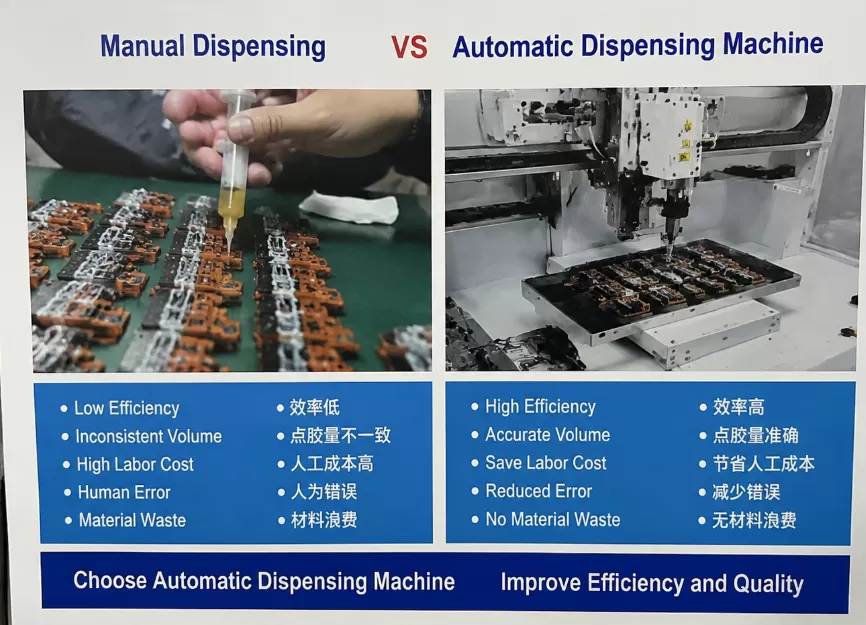
Working Principle: Vacuum dispensing machines operate using vacuum suction technology. The process involves three stages: Evacuating air from the working chamber to create a negative pressure environment. Sucking adhesive into the suction port under negative pressure, sealing it to prevent air entry. Transporting the adhesive to the target location for precise dispensing. Control and Maintenance: The machines are equipped with advanced control systems (PLC or CNC), allowing users to precisely adjust dispensing volume, speed, and path. Regular maintenance (cleaning, calibration, part replacement) is essential for long-term reliability. Application Cases by Industry: Electronics manufacturing: Used for circuit board soldering points, semiconductor packaging, and fixing components in consumer electronics (phones, computers, cameras). Automotive industry: Applied to seal headlights, windshields, body joints, and fix automotive electronics like dashboards and navigation systems. Medical devices: Ensures sealing and stability in syringes, pacemakers, artificial joints, and biosensors. Other fields: Includes optical module manufacturing, aerospace (fixing and sealing precision parts), and mechanical engineering (connecting mechanical components). Conclusion: High-precision dispensing machines play an indispensable role in multiple industries due to their accuracy and efficiency. As manufacturing demands for high-quality products grow, these machines will have even broader market prospects and development potential.
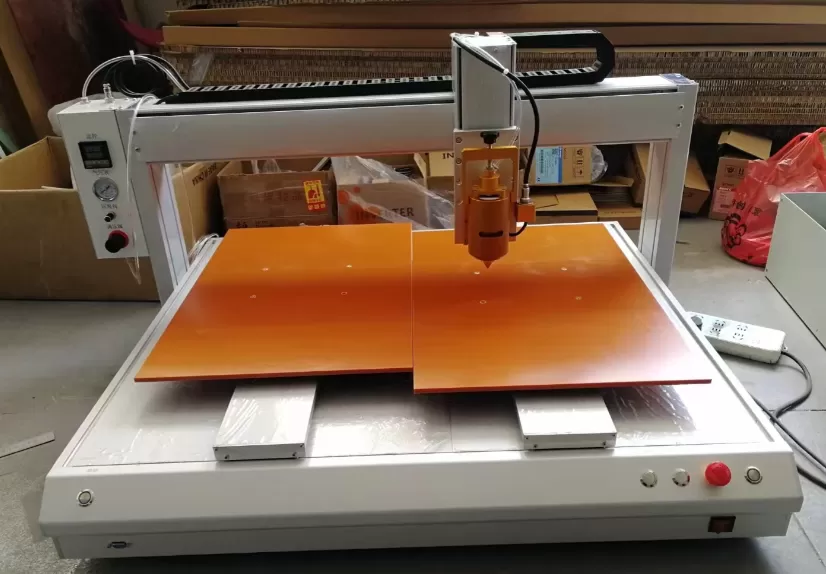
Working Principle of Dispensing Machines and Specific Application Cases by Industry
As a high-precision automated device, the vacuum dispensing machine plays a vital role in modern industrial production. With its efficient and accurate dispensing capabilities, it is widely used in electronics, semiconductors, optics, medical devices, and other fields, especially excelling in high-precision product dispensing operations. This article provides a detailed introduction to the working principle and process of vacuum dispensing machines, helping readers better understand and apply this technology.**Working Principle of the Vacuum Dispensing Machine**
The working principle of a vacuum dispensing machine is based on vacuum suction technology. Its operation can be divided into three main steps: evacuating air, sucking up adhesive, and dispensing.
First, in the air evacuation stage, the vacuum pump removes air from the working chamber to create a negative pressure environment. This step is crucial because it forms a vacuum area near the suction port, preparing the system for the subsequent adhesive suction process.
Next comes the adhesive suction stage. In this stage, the adhesive is placed at the suction port. Due to the negative pressure in the vacuum area near the suction port, the adhesive is drawn into the port and sealed inside to prevent air from entering. This step requires very precise selection and handling of the adhesive to ensure its purity and quality, avoiding any adverse effects on the dispensing result.
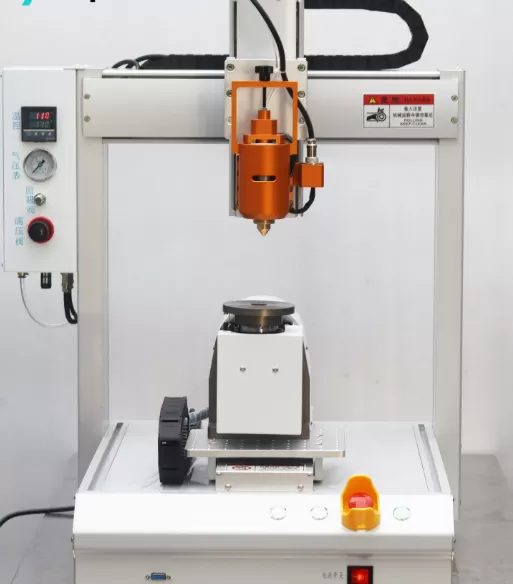
Finally, the dispensing stage. After the adhesive is drawn into the suction port, it is transported via a delivery system to the target location where precise dispensing is needed. In this step, the vacuum dispensing machine, thanks to its high-precision control system, can accurately adjust parameters such as dispensing volume, speed, and path, ensuring that the adhesive is applied exactly according to the intended trajectory and quantity.
Throughout the entire workflow, the various components of the vacuum dispensing machine work together to complete the dispensing task. The vacuum pump creates the negative pressure environment, the suction port draws in the adhesive, the delivery system transports the adhesive to the designated position, and the control system precisely controls and regulates the entire process.
It is worth noting that vacuum dispensing machines are equipped with advanced control systems, typically using programmable logic controllers (PLCs) or computer numerical control (CNC) systems, to achieve precise adjustment and automated control of dispensing parameters. Users can control the working status of the dispenser through programming or manual settings based on actual production needs, ensuring that the adhesive is applied accurately according to the predetermined path and quantity. This high degree of automation and precision greatly improves production efficiency and product quality.
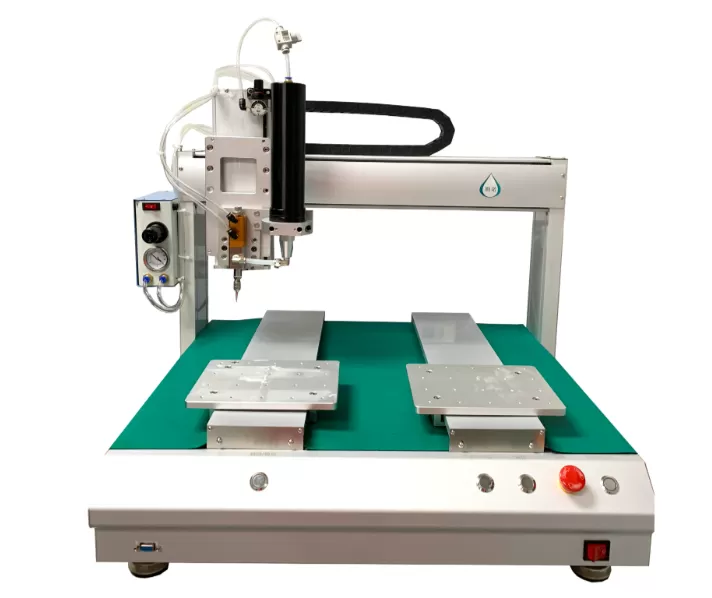
In addition, proper maintenance and care are key to ensuring the long-term stable operation of vacuum dispensing machines. Routine operations such as regular cleaning, inspection, calibration, replacement of worn parts, and checking the air pressure source can extend the equipment's service life and maintain its accuracy and stability.
In summary, the vacuum dispensing machine, with its efficient and precise dispensing capabilities, plays an irreplaceable role in modern industrial production. Its working principle, based on vacuum suction technology, achieves precise control and automated dispensing of adhesives through the three steps of evacuating air, sucking up adhesive, and dispensing. Meanwhile, advanced control systems and strict maintenance measures ensure long-term stable operation and high-quality production. As technology continues to advance and application fields expand, vacuum dispensing machines will play an even greater role in the future, bringing more convenience and benefits to industrial production.
**Specific Application Cases of High-Precision Dispensing Machines in Various Industries**
As an important piece of equipment in modern manufacturing, the high-precision dispensing machine plays a significant role in many industries due to its high accuracy and efficiency. Below are several specific cases illustrating its applications across different industries.
**1. Electronics Manufacturing**
In the electronics manufacturing industry, high-precision dispensing machines are indispensable. Take circuit board manufacturing as an example. The dispenser can accurately apply adhesive to solder joints, not only improving soldering quality and reliability but also effectively preventing issues such as leakage and short circuits. In semiconductor packaging, the dispensing machine also plays a critical role, ensuring chip stability and performance as a key part of the semiconductor manufacturing process. Moreover, in the production of consumer electronic products such as mobile phones, computers, and digital cameras, high-precision dispensers are widely used for fixing electronic components, filling gaps, and sealing, providing strong support for product stability and durability.
**2. Automotive Industry**
The automotive industry is another important application area for high-precision dispensing machines. During the manufacturing and assembly of automotive parts, dispensers are used for various sealing, bonding, and fixing processes. For example, sealing critical areas such as headlights, windshields, and body joints relies on the precise operation of dispensers. This ensures the tightness and stability of these components, thereby improving the overall quality and safety of the vehicle. In addition, in the production of automotive electronics such as dashboards and navigation systems, high-precision dispensing machines are also essential for accurately fixing and connecting electronic components, enhancing product reliability and stability.
**3. Medical Device Manufacturing**
High-precision dispensing machines are also widely used in the medical device manufacturing industry. During the assembly of medical devices, dispensers are used to fix and seal various precision components. For instance, in the production of syringes, pacemakers, and artificial joints, the dispenser can accurately apply adhesive to ensure the sealing and stability of the devices, providing a strong guarantee for safety and effectiveness in the medical field. Furthermore, in the manufacturing of biosensors, high-precision dispensers are used to apply biomaterials and fix sensor elements, offering technical support for accurate measurement and stability of biosensors.
**4. Other Industries**
In addition to the above industries, high-precision dispensing machines also play important roles in optical module manufacturing, aerospace, mechanical engineering, and other fields. In the production and installation of optical modules, dispensers can precisely position adhesive and control flow to ensure accurate placement and stability of optical components. In the aerospace industry, dispensers are used to fix and seal various precision parts, ensuring the safety and reliability of aircraft. In mechanical engineering, dispensers are employed to fix and connect mechanical components, improving the stability and durability of mechanical equipment.
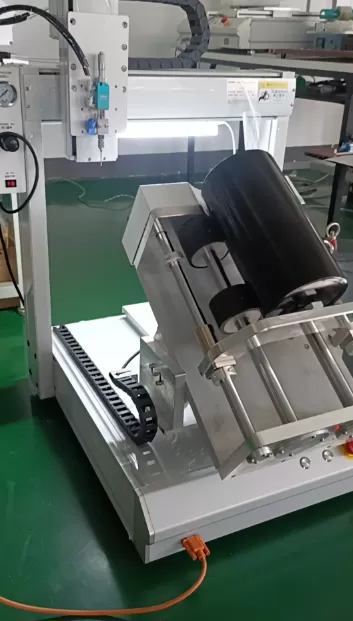
In summary, high-precision dispensing machines, characterized by their high accuracy and efficiency, play a vital role in electronics manufacturing, the automotive industry, medical device manufacturing, and many other sectors. Through the analysis of specific cases, we can gain a deeper understanding of the applications and importance of high-precision dispensing machines across different industries. Looking ahead, as manufacturing continues to develop and the demand for high-quality products increases, high-precision dispensing machines will enjoy even broader market prospects and development space.