Core Operating Principles Pneumatic: uses compressed air to drive a piston, with PID control to compensate for fluctuations. Servo: uses an electric motor, ball screw, and encoder—executes commands precisely, without guesswork. The Hidden Cost of Pneumatics Sensitive to air pressure changes, temperature, and viscosity drift. "Cheap" upfront but often leads to rework and scrap due to unpredictability over a shift. Where Pneumatics Still Win Simple dot dispensing, forgiving materials, wide tolerances. Lower initial cost and easier maintenance for standard applications. When Servos Are Worth It Micro‑dots, complex patterns, and materials with changing viscosity (e.g., thermal greases, moisture‑curing adhesives). Indifferent to ambient fluctuations—consistency reduces rejects and setup time. The Overlooked Hybrid: Servo‑Pneumatic Combines pneumatic force with closed‑loop feedback and proportional valves. Achieves ±0.1 mm accuracy with 30% less air consumption. Ideal for tasks needing both high force and moderate precision. Decision‑Making Criteria Evaluate material stability, tolerance requirements, and compressor reliability. Do not get trapped in a binary choice—consider hybrids if your application falls in the middle.
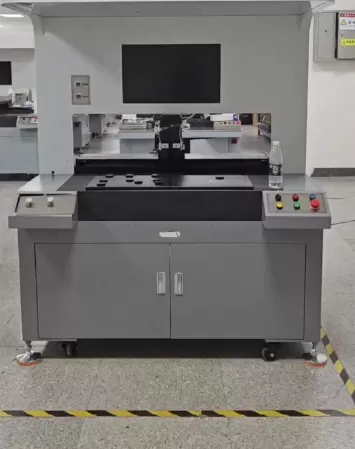
Servo Dispensing vs Pneumatic Dispensing
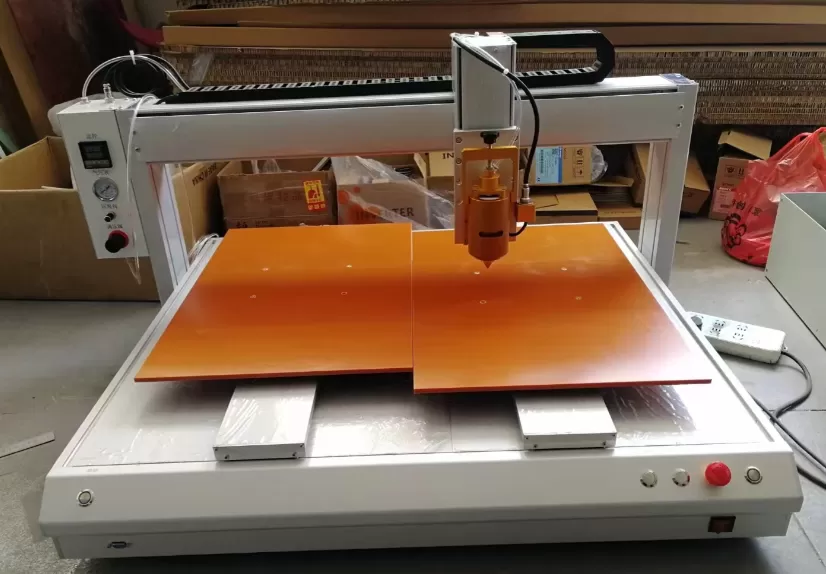
Walk onto almost any assembly floor and you will see pneumatic dispensers everywhere. They are cheap, simple, and they work—most of the time. But if you have ever chased a drifting dispense weight on a Monday morning after the plant air compressor took the weekend off, you already know the limitation. The real question is not which technology is "better." It is which one stops costing you money the moment you install it.How Each One Actually Works
A pneumatic positive-displacement dispenser uses compressed air to drive a piston or rod that pushes material out of a measuring chamber. A linear position sensor tracks the rod, and PID controls adjust air pressure on the fly to maintain the set rate. It sounds sophisticated, and it is—for a system that runs on air.
A servo-powered dispenser replaces all of that with an electric motor, a ball screw, and a closed-loop encoder. The motor knows exactly where the rod is at every millisecond. It does not guess. It does not compensate. It executes.
That is the core difference: one system reacts to conditions; the other dictates them.
The Hidden Cost of "Good Enough"
Here is where most comparison guides miss the point. They talk about accuracy percentages and cycle times, but they ignore what actually drives purchasing decisions on the floor: unpredictability.
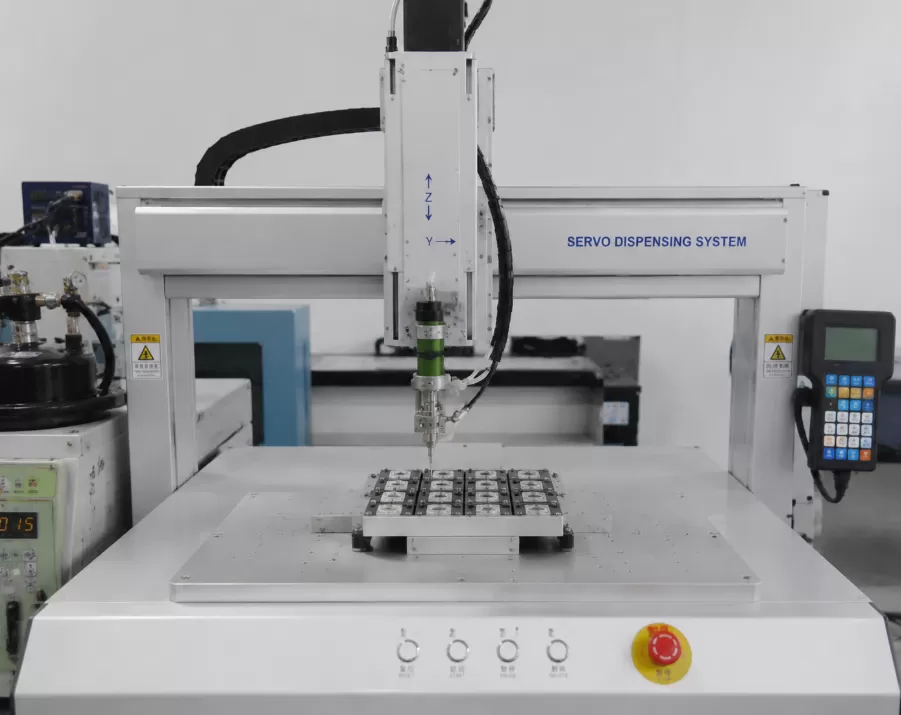
Pneumatic systems are sensitive to everything. Plant air pressure fluctuates. Temperature changes alter viscosity, and because air is compressible, the system's response changes too. A pneumatic dispenser that ran perfectly at 9 AM can drift by noon simply because the compressor room got warmer. That drift means rework. Rework means scrap. Scrap means the "cheap" system just got expensive.
Servo systems, by contrast, are indifferent to ambient conditions. They maintain their programmed rate and volume regardless of what the rest of the plant is doing. That consistency is not a luxury—it is a requirement for anyone running high-mix, low-volume production where setups change constantly and there is no time to recalibrate every shift.
Where Pneumatics Actually Win
None of this means pneumatics are obsolete. For shot-dispensing applications—simple dots, basic fills, materials that are forgiving—a pneumatic system is still the right call. The upfront cost is lower. The technology is well understood. Any maintenance tech can troubleshoot a pneumatic cylinder. If your tolerances are wide and your volumes are high, pneumatics get the job done.
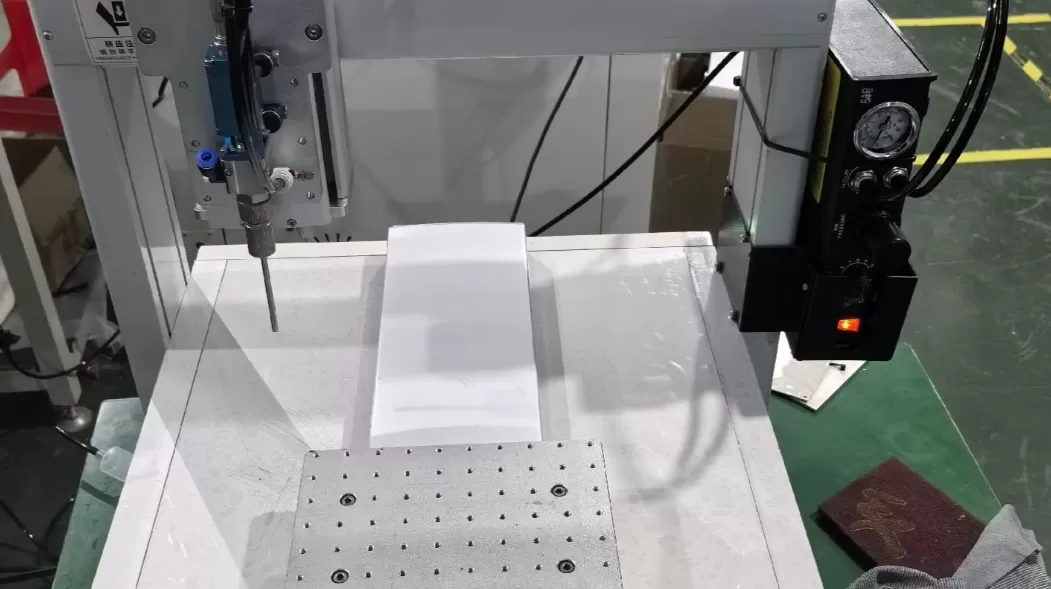
But if your application involves micro-dots, complex patterns, or materials that change viscosity over time, pneumatics start to struggle. Conventional pneumatic dispensers cannot reliably handle particle-filled thermal interface materials or moisture-curing adhesives that demand precise start-stop control. The valve response time is slower. The air flow is uneven. What you save in purchase price, you pay for in rejected parts.
The Third Way Nobody Talks About
There is a hybrid approach that rarely gets mentioned in the servo-versus-pneumatic debate: servo-pneumatic systems. These use a pneumatic cylinder for raw force but add closed-loop feedback, proportional valves, and a controller that actively manages air delivery. The result is positioning accuracy comparable to electric servos—often ±0.1 mm or better—but with the power density of pneumatics. They also consume up to 30 percent less air than standard pneumatics because they only use what they need.
For applications like pressing, inserting, or any task that requires both high force and moderate precision, servo-pneumatics bridge the gap. They are not cheap, but they are cheaper than a full electric servo system with similar force output.
Making the Call
The decision ultimately comes down to what you are dispensing and how much variability you can tolerate. If your material is stable, your tolerances are loose, and your compressor is reliable, buy pneumatic. If you are dispensing thermal grease onto automotive sensors or micro-drops of adhesive into smartwatch threads, buy servo—and buy the closed-loop version that gives you real feedback, not just a motor that spins.
And if you find yourself somewhere in the middle, do not let the binary choice trap you. Ask your vendor about servo-pneumatic. It might be the solution that actually fits.